

National Quantum Mission Marks a Bold Leap into the Future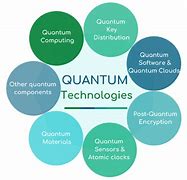
India’s scientific landscape is undergoing a tectonic shift, and the National Quantum Mission (NQM) stands at the epicenter. Far from being just another policy announcement, this initiative is redefining how India positions itself in the global tech race.
The National Quantum Mission isn’t just an experiment in high theory. It’s a well-structured, time-bound quantum tech strategy aimed at transforming communication, computing, defense, and industry. Let’s break down what makes this mission an extraordinary leap into tomorrow.
🚀 Vision That’s Measured in Quantum Bits, Not Just Words
While many nations talk about quantum supremacy, India is executing it. The National Quantum Mission comes with a budget exceeding ₹6000 crore and a clearly laid roadmap till 2031.
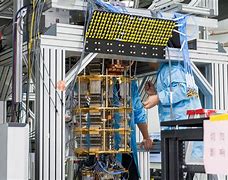 Here’s what it promises:
-
🎯 Development of Quantum Computers with up to 1000 physical qubits in eight years
-
🌐 Satellite-Based Secure Quantum Communications for defense and banking
-
🧪 Establishment of Four Thematic Hubs (T-Hubs) across the country
-
🔐 Quantum Key Distribution (QKD) systems to replace classical encryption
-
👩🔬 Skilling Programs to train over 25,000 students in quantum science
This is not vague ambition. These are concrete targets, backed by resources and timelines—a rarity in scientific missions.
🧠 Technology That Redefines Intelligence and Security
The true strength of the National Quantum Mission lies in its interdisciplinary focus, integrating physics, computer science, mathematics, and engineering. It aims to solve challenges that classical systems simply cannot.
Key Specifications Being Developed: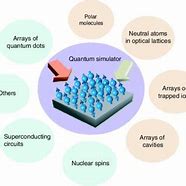
-
⚛️ Quantum Processors: Prototype processors with superconducting and photonic qubits
-
🔄 Quantum Simulators: For use in material science, drug discovery, and optimization problems
-
🔗 Quantum Communication Channels: Ultra-secure, hack-proof messaging architecture
-
🛰️ Quantum Satellite Nodes: Designed for long-distance entanglement and secure data transfer
-
🛡️ Quantum Sensing Tools: For precise navigation and earthquake detection
These are not theoretical aspirations. Development work is already underway, with prototypes expected by 2026 and scalable models by 2030.
🌍 A Mission That Aligns Science with Sovereignty
India isn’t simply copying the West. Through the National Quantum Mission, the country is crafting an independent quantum ecosystem.
 Why that matters:
-
🇮🇳 Data Security: No dependency on foreign algorithms for national defense or financial encryption
-
🏛️ Academic Autonomy: Indian researchers gain access to indigenously built quantum hardware
-
🧬 Tech Sovereignty: India owns its intellectual property and doesn’t rent innovation
-
📊 Economic Impact: Quantum startups and MSMEs can integrate this tech without importing it
This mission plants India firmly in the top league of quantum-capable nations—not as a follower, but as an innovator.
🏫 Building the Quantum Workforce of Tomorrow
The National Quantum Mission is not just about machines; it’s about minds. Recognizing that India’s strength lies in its youth, the mission also emphasizes capacity building.
Here’s how it’s nurturing talent:
-
🎓 Fellowships and PhD Programs in quantum computing and information theory
-
🏫 Collaboration with IITs, IISc, and NITs for curriculum revamp
-
🧑🏫 Industry Internships tied to live quantum projects
-
🌏 Global Collaboration Portals for joint research with countries like Germany, Japan, and Israel
The goal? To produce a world-class quantum-ready workforce by 2030—engineers, physicists, and system architects equipped for the post-silicon era.
🔬 Thematic Hubs That Drive Focused Innovation
Unlike scattered research programs, the National Quantum Mission takes a hub-and-spoke model to streamline R&D. Each Thematic Hub (T-Hub) focuses on a core pillar of the quantum ecosystem.
 Breakdown of T-Hubs:
-
🖥️ Quantum Computing Hub – Building fault-tolerant quantum processors
-
📡 Quantum Communication Hub – Creating hardware for secure satellite links
-
🔍 Quantum Sensing & Metrology Hub – Tools for defense, medicine & navigation
-
🧠 Quantum Materials Hub – Focused on photonics, cryogenics, and quantum memory
Each hub collaborates with premier labs, private tech partners, and international bodies—creating a nucleus of targeted innovation.
📈 Why This Is More Than a Mission—It’s a Market Maker
The National Quantum Mission is already fueling interest from venture capitalists, think tanks, and tech entrepreneurs. With the global quantum computing market expected to hit $125 billion by 2035, India is planting its stake early.
Economic Highlights:
-
💰 Boost to Quantum Startups – Special grants and incubation support
-
📦 Quantum-as-a-Service (QaaS) models to be launched via Indian cloud platforms
-
🏗️ Manufacturing Roadmap – India to produce quantum hardware locally
-
📈 IP Creation Push – Encouraging patents and open-source frameworks
The result? An entirely new tech economy, grounded in sovereign innovation and global relevance.
✅ Final Thought: The National Quantum Mission Isn’t Optional—It’s Urgent
In a world speeding toward AI, cybersecurity threats, and climate modeling, quantum tech isn’t luxury—it’s necessity. And India is no longer waiting to be invited to the table.
With a clear strategy, deep funding, and futuristic goals, the National Quantum Mission is a once-in-a-generation leap that transforms India’s tech identity—from a service-based follower to a research-powered leader.