
Shashi Tharoor’s Response to Donald Trump: A Politician’s Assertive Rebuttal:
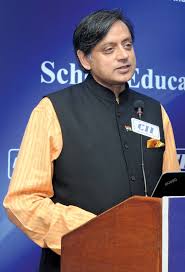
The clash of ideologies between Shashi Tharoor, the Indian Member of Parliament, and former U.S. President Donald Trump is a reflection of the broader geopolitical tensions that shape the modern political landscape. When Trump made disparaging remarks about India’s environmental policies and leadership, Tharoor, known for his eloquent and sharp commentary, didn’t hesitate to counter the accusations. This article dives into the essence of Tharoor’s response, highlighting his political acumen, his defense of India’s policies, and the contrasting political approaches between the two figures.
Trump’s Remarks: A Misinformed Perspective
Donald Trump’s comments about India were not unexpected given his history of controversial statements. During his tenure as the U.S. president, Trump often made sweeping claims about various countries, portraying them in a negative light, often without a nuanced understanding of their complexities. In his remarks about India, Trump criticized the nation’s environmental record and accused it of not doing enough to tackle climate change. He claimed that India’s leaders were more concerned with their economic growth than addressing global environmental challenges, reflecting an outdated and misinformed understanding of India’s policies.
This reductionist viewpoint failed to take into account the strides India has made in addressing climate change, particularly in the areas of renewable energy development, environmental conservation, and international cooperation on environmental issues. Tharoor, an advocate for informed political discourse, was quick to set the record straight.
Tharoor’s Assertive Response: A Defense of India’s Progress
Tharoor’s response to Trump was assertive, fact-driven, and delivered with a clarity that left no room for ambiguity. He emphasized that India’s environmental policies and commitments to tackling climate change are among the most progressive in the developing world. Unlike Trump’s mischaracterization of India’s approach, Tharoor pointed out that India is a signatory to the Paris Agreement and has set ambitious goals to increase its renewable energy capacity. By 2030, India aims to generate 50% of its electricity from non-fossil fuel sources and reduce the carbon intensity of its economy by 30-35% from 2005 levels.
Moreover, Tharoor addressed the challenges India faces in balancing its development needs with environmental concerns. He acknowledged that while India’s development trajectory is still in its nascent stages compared to developed countries, it has nonetheless made significant strides in reducing its carbon footprint while lifting millions of people out of poverty. The Indian government’s push towards electric vehicles, renewable energy, and the implementation of sustainability-focused policies were all key points Tharoor underscored in his defense.
A Clash of Ideologies: Globalism vs. Nationalism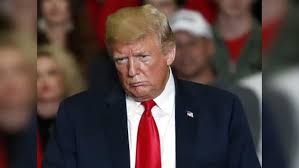
At the heart of Tharoor’s response is a confrontation of ideas between globalism and nationalism. While Trump’s rhetoric has been predominantly nationalist—prioritizing America’s interests and asserting that global agreements often disadvantage the U.S.—Tharoor has consistently championed global cooperation. Tharoor believes in a world where nations work together, leveraging their individual strengths to tackle shared global challenges. He’s often vocal about the need for multilateralism and cooperation between developed and developing nations.
In contrast, Trump’s “America First” agenda has been built around a belief that the United States should retreat from global commitments, pursuing policies that primarily benefit the country’s immediate economic and political interests, regardless of their international impact. This stark difference in approach becomes evident when looking at the broader context of their comments on global issues. While Trump’s policies often sought to isolate the U.S. from global agreements and partnerships, Tharoor consistently advocates for policies that emphasize the importance of collective action, particularly when it comes to global challenges like climate change, pandemics, and geopolitical instability.
Tharoor’s push for collaboration is grounded in the recognition that no country can thrive in isolation in the 21st century. He asserts that the best way forward is through dialogue, shared responsibility, and a deep respect for diverse perspectives. By positioning himself as an advocate for globalism, Tharoor aims to challenge the dangerous allure of nationalism that has taken hold in many parts of the world.
The Importance of Leadership in Global Climate Action
Tharoor’s rebuttal to Trump was not merely a defense of India’s position but also a broader call for responsible leadership in global climate action. Tharoor pointed out that climate change is a global issue that transcends borders, and it is vital for countries—especially major economies like the U.S. and India—to lead the charge in combating it. He stressed that Trump’s dismissive stance on climate change, particularly his withdrawal from the Paris Agreement, had undermined international efforts to tackle one of the most pressing challenges of our time.
India, despite its developing status, has taken on a leadership role in global climate discussions, advocating for the needs of the Global South. Tharoor’s reference to India’s position in these discussions highlighted the country’s pragmatic approach to sustainable development—one that balances economic growth with environmental responsibility. He pointed out that India’s rising global influence is rooted in its leadership on issues like climate justice and sustainable development.
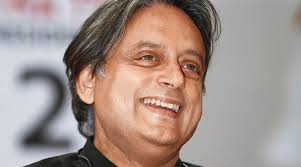
Conclusion: Tharoor’s Call for Informed Dialogue
In the end, Shashi Tharoor’s response to Donald Trump’s comments was not just about correcting inaccuracies but about reaffirming the importance of informed political dialogue. Tharoor’s response was both a defense of his country and a broader critique of the nationalist rhetoric that has been popularized in recent years. By championing global cooperation, he not only countered Trump’s divisive perspective but also highlighted the need for a more inclusive and nuanced approach to international relations.
As the world grapples with challenges that no country can solve alone, leaders like Tharoor are calling for a future where dialogue, collaboration, and respect for diverse nations’ needs take precedence over isolationist tendencies. Tharoor’s assertive rebuttal serves as a reminder that leadership in the modern world requires a balance of national priorities with global responsibilities—a message that continues to resonate in today’s increasingly interconnected world.